
Breast changes during menopause – how to respond the right way

Menopause brings many changes – physical, hormonal, and emotional. For many women, this also means: the bra suddenly fits differently. Cups are too small, the underbust band slips, or the breast shape changes from month to month. All of this is normal. Menopause is a phase of transition, and your body naturally responds to it. This is particularly noticeable around the breast: size, firmness, and shape change – sometimes gently, sometimes noticeably. Many women report that their favorite bra suddenly feels tight from one day to the next. Or it no longer provides the same support. The body changes, so the demands on a bra must inevitably adapt. In this article, you will learn why the breast behaves differently during menopause. You will learn how to check your bra size and which materials and designs are particularly comfortable to wear now. Additionally, a menopause expert discusses how women can accompany these changes with self-care.
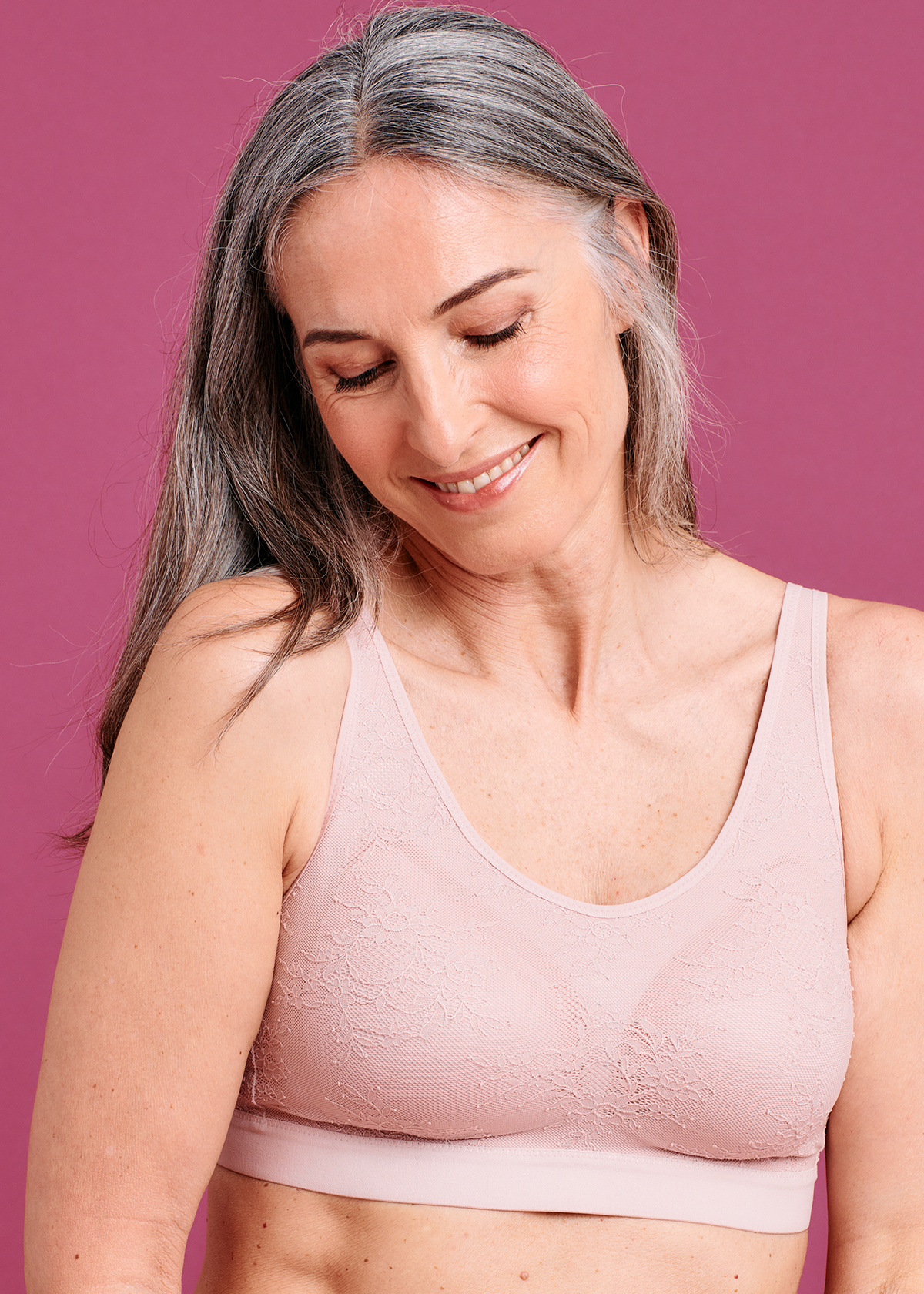
What changes during menopause?
When estrogen levels drop, it not only affects mood, warmth, or sleep. The breast tissue and skin also change significantly. The hormone estrogen usually keeps the tissue firm and elastic. When this hormone decreases, the tissue loses firmness. The connective tissue becomes weaker, and the breast loses fullness or feels different. Many women notice that their breasts become more sensitive or react more strongly to pressure. Often, the breasts also become asymmetrical: one breast is slightly larger or heavier, the other smaller or softer. These are normal consequences of hormonal changes and no cause for concern. Additionally, the body redistributes fat. Some women gain weight in the upper body, while others lose volume in the breasts. Both change the fit of the bra, as the bust size and cup size change. If you notice severe pain, lumps, or changes on only one side, please talk to your doctor. For most women, these changes are a normal part of menopause.
How to Tell if Your Bra No Longer Fits
The following signs indicate that your bra is no longer fitting optimally – even if you've been wearing it for years:
- The straps keep slipping, even though you haven't adjusted them.
- The underband is on the tightest hook and is still loose.
- The cups press at the top or stand away at the bottom.
- The shape of your breasts no longer fills the cups evenly.
- You feel constricted or sensitive in the chest area more quickly.
- The bra "shifts" while wearing: it fits in the morning but not in the evening.
Many women are surprised at how quickly these changes can become noticeable. Your body sends clear signals – and it's worth listening to them.
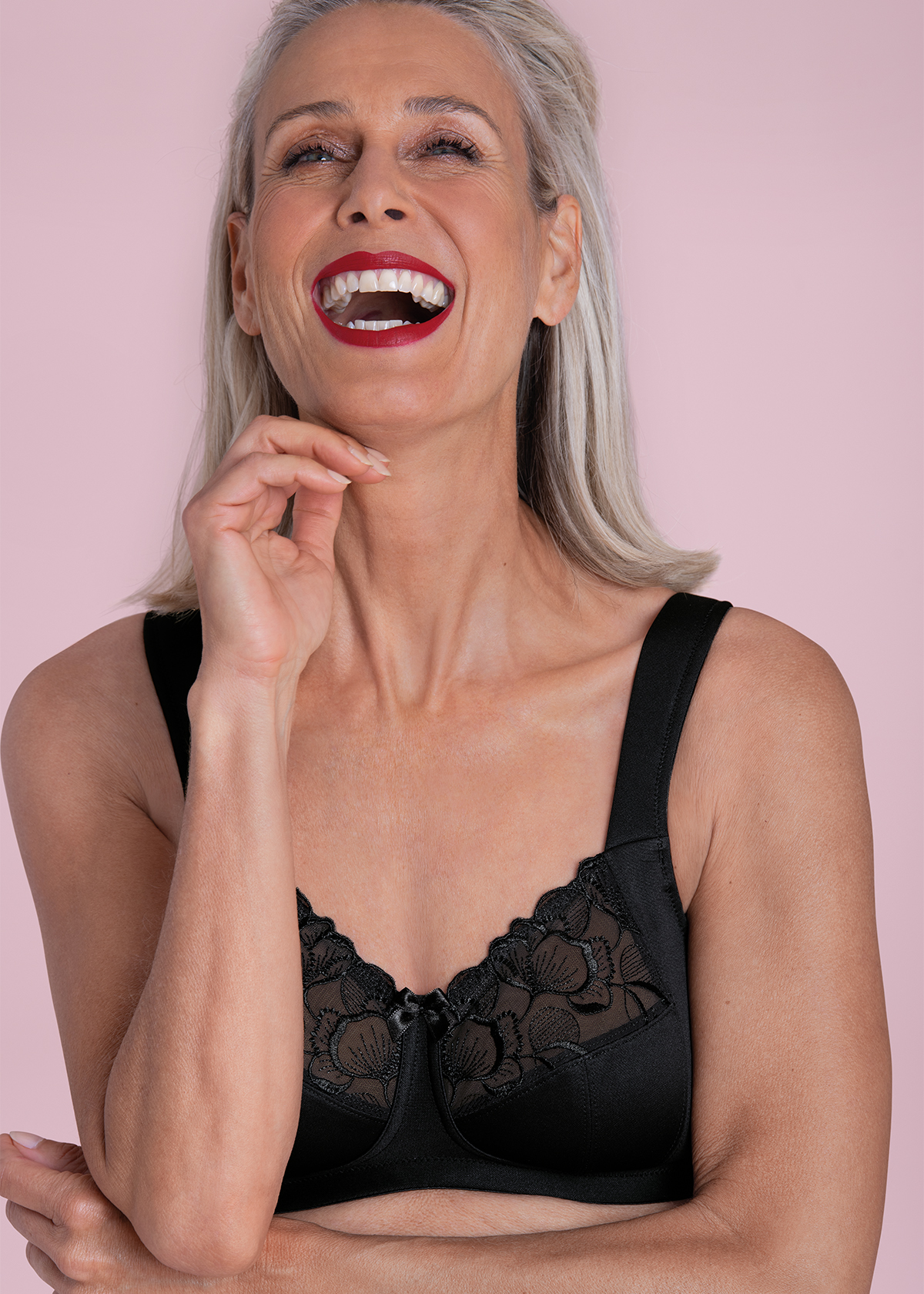
Find Your Current Bra Size
If your breasts change during peri- or menopause, it's worth re-measuring your size. Our ANITA size calculator guides you step by step through the two measurement points: underbust measurement and bust measurement – simple, quick, and reliable.
1. Measure Underbust
- Place the measuring tape directly under the bust. Make sure it runs horizontally around the entire torso.
- Pull the measuring tape slightly tight and round the measurement up or down if necessary.
- Enter the value in the size calculator by sliding the slider to your underbust measurement.
2. Measure Bust
- Place the measuring tape horizontally around the fullest part of your bust – usually at nipple level.
- Ensure the measuring tape is in a horizontal position at the front and back.
- Round up to the nearest whole number if necessary and adjust the slider accordingly.
The calculator will then show you your bra size and suitable sister sizes. A helpful basis for finding models that now provide your bust with optimal support and comfort.
Comfort & Materials: What You Especially Need Now
During menopause, hormones change. You can feel it on your skin. Many women then react more sensitively to seams, heat, or pressure. Therefore, it is now important to pay attention to the right fabrics. They should be breathable, provide support, and feel gentle.
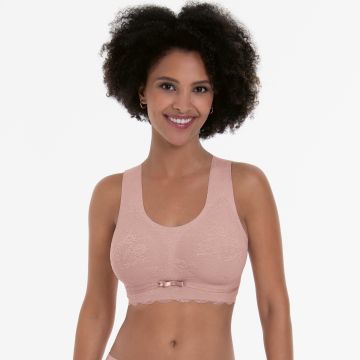
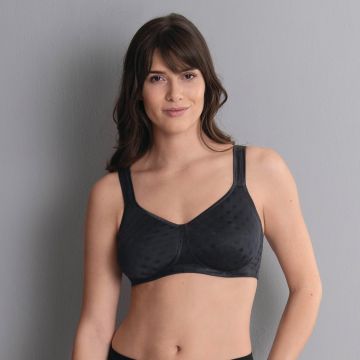
- Soft microfiber: Feels pleasant on sensitive skin, is lightweight and breathable – ideal if you get warm quickly.
- Smooth cups: Very suitable if the shape of the breast changes or the skin reacts sensitively.
- Wide straps: Protect the shoulders, even if the tissue becomes softer.
- Flexible underbust band: Provides support without constricting – important if the body retains water.
- Moisture-regulating fabrics: They are a great help, especially during hot flashes.
A bra is not a rigid garment. It adapts to your needs and supports you. It does not force your body into a fixed shape.

Body Awareness & Well-being – Small Tips for Big Impact
Menopause challenges you physically and emotionally. Good self-care helps you during this time. Here are some simple tips that have a big impact:
- Check your bra size regularly: Check your bra size regularly: it's best to measure every six to twelve months.
- Own two to three different types of bras: one for quiet days, one for active days, and one for times when your breasts are more sensitive.
- Move a lot: Walks, yoga, and light strength exercises strengthen your connective tissue and improve your body awareness.
- Moisturize your skin: During menopause, the skin dries out faster.
- Embrace the change: Take a deep breath. Menopause is not just a phase to endure – it is a transformation.
Conclusion – Change does not mean loss, but a new beginning
Menopause is a new phase of life, and your needs change. During this time, your breasts may become softer, more sensitive, or change shape. This is not a mistake, but a natural process. The right bra helps you feel comfortable, secure, and free.
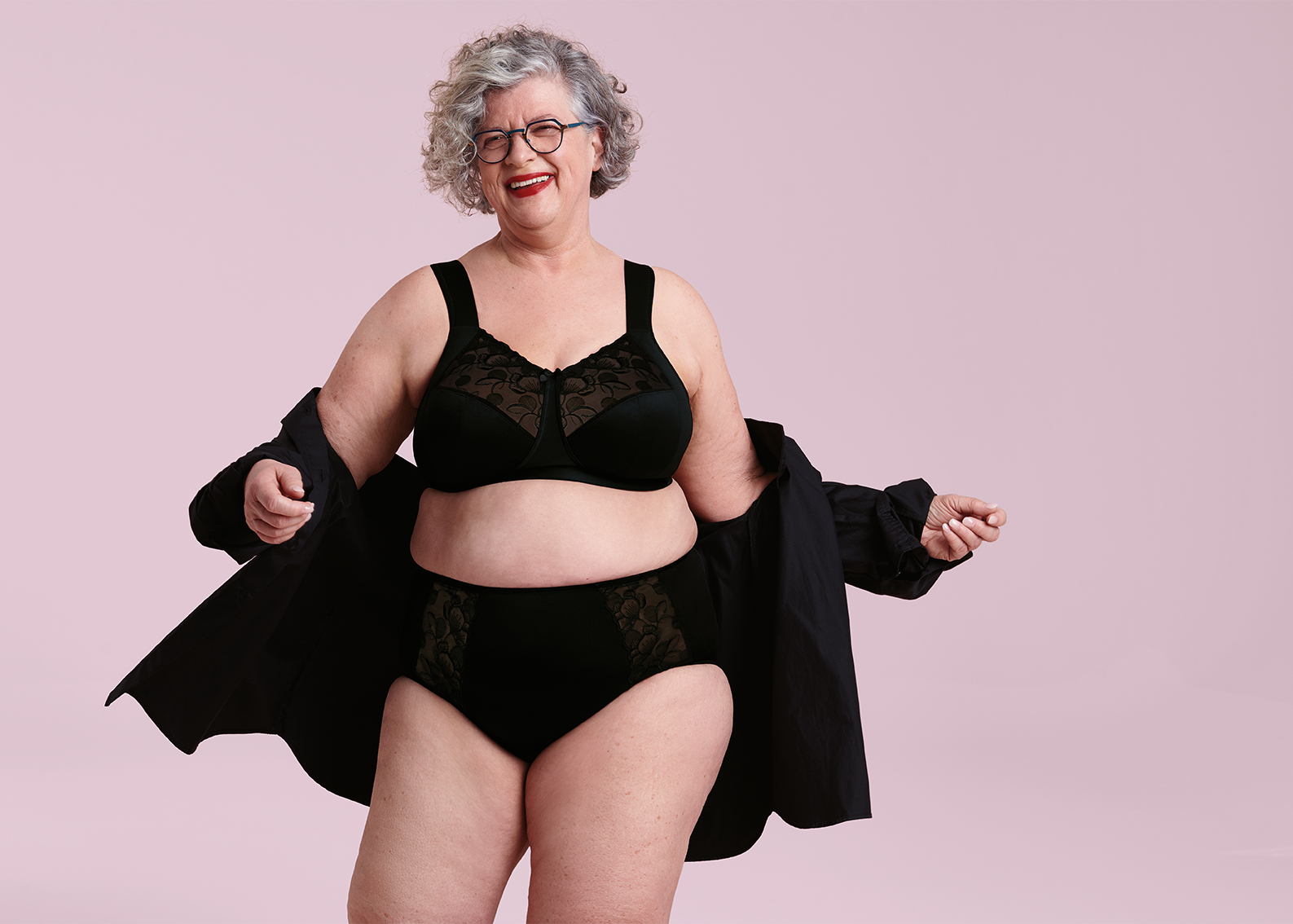
Take the freedom to try something new: new sizes, new fabrics, and new cuts. A bra does not judge your body, it supports it. In our selection of comfort bras and full-cup bras, you will find exactly the models that fit your stage of life. They are gentle, high-quality, and specially made for large cups.

Comments:
No Comments