
Differently Sized Breasts: How to Find Support and Balance
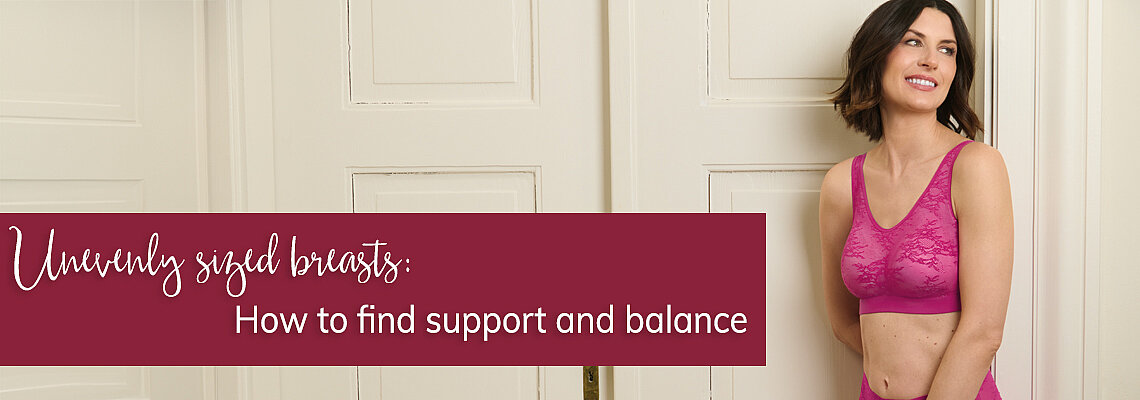
Breasts of different sizes are completely normal – a body is never completely symmetrical. Often the difference is small and hardly noticeable in everyday life. Sometimes, however, the shape or volume is significantly different, so that a bra fits perfectly on one side and presses, slips, or stands out on the other.
In this article, you will get practical tips on how to balance fit differences – with the right cut, small aids, and (if you want) discreet solutions for more confidence in everyday life.
Why asymmetry is completely normal
Breasts can differ in size, shape, nipple height, or firmness. This can be genetic, change over the years, or become more noticeable in certain life phases – for example, due to weight fluctuations, pregnancy/breastfeeding, or hormonal changes.
What's important is: Asymmetry is not a "problem" that you need to hide. It's more about feeling comfortable – and that your lingerie supports you instead of constantly reminding you in everyday life that "something doesn't fit."
The most important principle: Adjust the bra to the larger breast
If your breasts are different sizes, you generally choose the bra size so that the larger breast fits well in the cup. A cup that is too small presses, can cut in, and often leads to you unconsciously adjusting the bra constantly.
You can then balance the smaller side – depending on how big the difference is and what feels most comfortable for you.
How to tell if your bra doesn't fit on one side
These signs quickly show you if your bra no longer sits calmly due to asymmetry:
- One cup side stands out (top or side) or wrinkles.
- One side cuts in or feels "too full."
- The center panel doesn't sit calmly or tilts slightly to the larger side.
- Straps slip on one side or need to be adjusted extremely differently.
- You constantly adjust (pulling, pressing, readjusting).
If you recognize yourself here, a combination of a suitable cut and a small balancing solution usually helps.
Which bra cuts can better balance asymmetry?
Depending on the extent, a bra can make the differences appear much "calmer" both visually and in terms of wearing comfort. Often, the following work particularly well:
- Smoothly worked, shaping cups: They give the smaller side more structure and make the fit under clothing appear more even.
- Multi-part cups: They shape stably and can better accommodate differences in breast shape.
- Models with higher cups: They enclose more area and often have a more balancing effect than very low-cut shapes.
Important: It's not the "look" that decides, but the fit. You need the cut that fits your breast – and feels good for you.
Small balancing aids: Pads, inserts, or light balancing parts
If the smaller side stands out in the cup, you can often balance the missing volume with an insert. The goal is not "more push," but a calmer fit: The cup lies flat, nothing flaps or wrinkles, and you feel secure.
This can suit you if the difference is rather moderate, you want to keep the balance flexible, or you are looking for a quick solution without changing the size.
Tip: Make sure the insert lies flat, doesn't slip, and doesn't show under clothing. If your skin is sensitive, choose materials that feel comfortable.
If the difference is greater: Prostheses and balancing solutions
If the size difference is significant (for example, more than one cup) or you want particularly high stability, special balancing solutions can be useful. This is nothing "dramatic," but simply an option that helps many women feel more comfortable in everyday life.
Depending on the need, there are different variants. A consultation can be very helpful here – especially to find the right size, shape, and wearing comfort.
Consultation: When it pays to seek support
If you're unsure what works best for you, a consultation in a specialist store or medical supply store can be useful – especially if you want to try a balancing solution or if the asymmetry bothers you in everyday life.
If you suddenly notice new, strong changes (for example, significant shape changes, lumps, unilateral pain), please also talk to your doctor. For most women, differences are normal – and easily solvable if the fit is right.
Mini-checklist: How to find your "balance" bra
- Choose size based on the larger breast (cup must not press).
- Underbust band stable: It provides support – not the straps.
- Cups lie flat: no wrinkles, no standing out.
- Adjust straps finely: don't over-tighten, but adjust appropriately.
- Balance if needed: Choose an insert that feels natural.
Conclusion
Breasts of different sizes are normal – and you don't have to "hide" them. With the right size, a suitable cut, and, if necessary, a small balancing solution, you will quickly find more balance. What matters is that you feel secure, can move freely, and that your bra supports you in everyday life.

Comments:
No Comments
